In 1916 Hermann Struck, who would later be one of the founders of Bank Mizrahi (today Mizrahi Tefahot Bank), published with the writer Herbert Eulenberg a book of sixty lithographs from the lands Germany had conquered in the East. It was printed by the German military command in the East, dedicated to General Ludendorff, and its foreword calls the authors' work a "contribution to the spiritual conquest" and the local population "the subjugated". Here is the whole book, the quotes in the original and in translation, and what they say about conquest, "spiritual conquest" and the Jews.
The book in brief
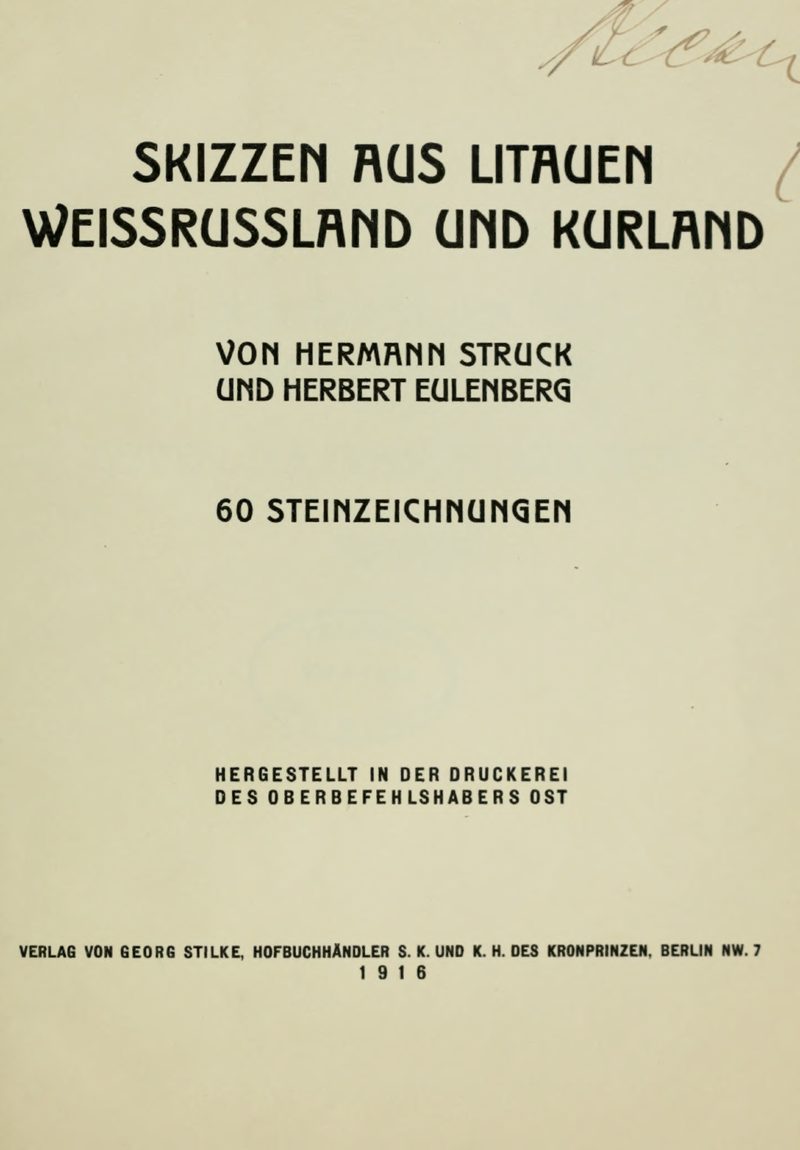
Title: Skizzen aus Litauen, Weissrussland und Kurland, sketches from Lithuania, White Russia and Courland. Sixty stone drawings (lithographs) by Hermann Struck, each with a short text by Herbert Eulenberg. Published by Georg Stilke, Berlin, 1916. The title page reads: Hergestellt in der Druckerei des Oberbefehlshabers Ost, printed at the press of the Supreme Commander East. Ober Ost was the German military government over the territories taken from Russia in the First World War, and General Erich Ludendorff was its chief of staff.
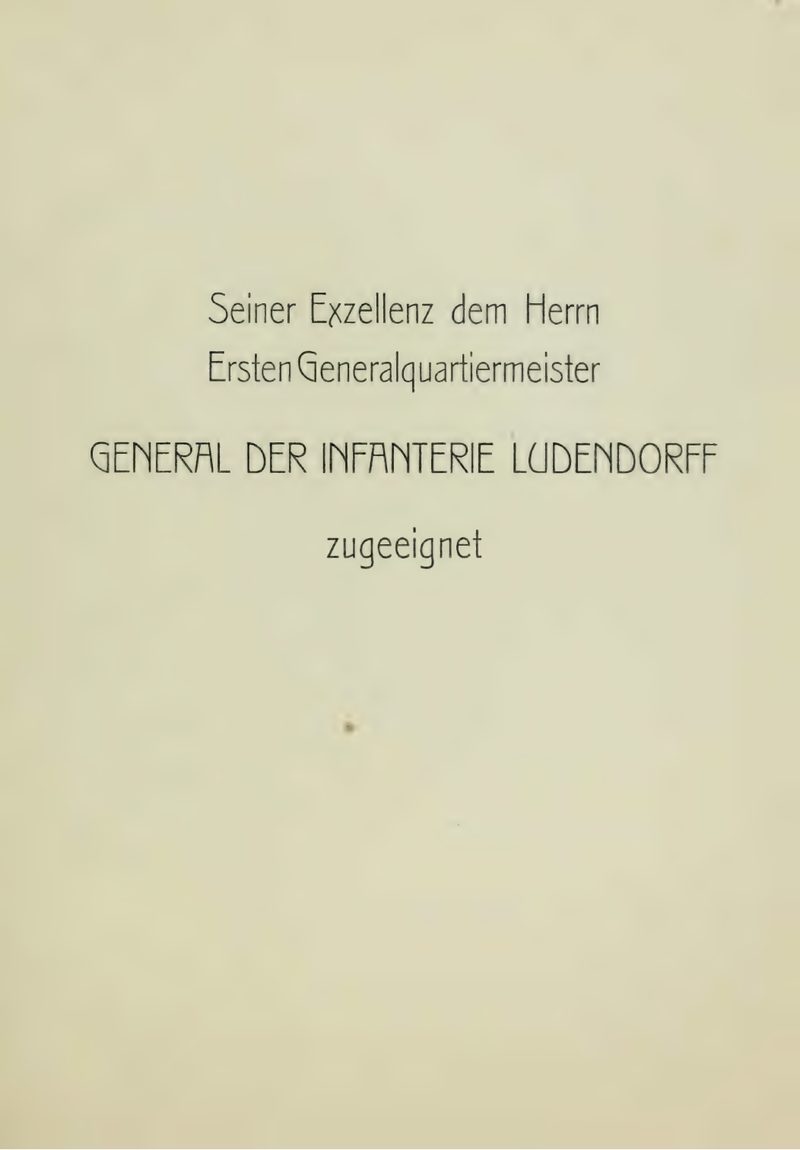
The dedication page: Seiner Exzellenz dem Herrn Ersten Generalquartiermeister General der Infanterie Ludendorff zugeeignet, dedicated to His Excellency, the First Quartermaster General, General of the Infantry Ludendorff. Seven years later, on 9 November 1923, Ludendorff marched beside Adolf Hitler in the Munich putsch, and later led a movement of his own, the Tannenberg League.
The full book, scanned from the University of Toronto copy on archive.org, is available for download at the end of this article. It is in the public domain: Struck died in 1944 and Eulenberg in 1949.
Who wrote what
This is the easiest point to get wrong, so it comes before the quotes. Struck made the drawings. The foreword is signed by both: Hermann Struck. Herbert Eulenberg. The texts beside the drawings are Eulenberg's. He writes in the first person and refers to Struck in the third: unser Struck (PDF page 28), Die Zeichnung Hermann Strucks (page 82), unser Zeichner (page 68). So every quote from the foreword is attributed here to both men, and every quote from the texts to Eulenberg alone, in a book Struck illustrated and signed as co-author.
The foreword: "spiritual conquest"
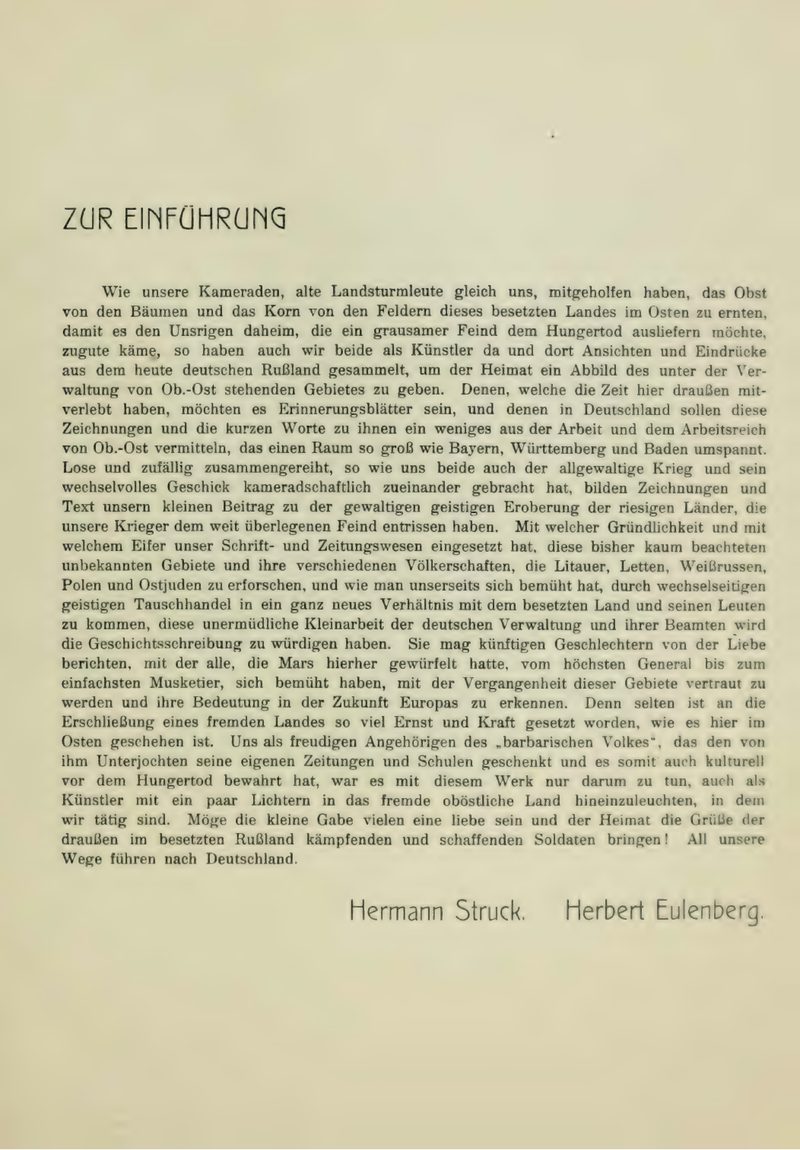
The foreword, Zur Einführung, is a single page (PDF page 13). These are its key sentences, in order.
On the harvest: their comrades of the reserve mitgeholfen haben, das Obst von den Bäumen und das Korn von den Feldern dieses besetzten Landes im Osten zu ernten, damit es den Unsrigen daheim [...] zugute käme, helped to pick the fruit from the trees and the grain from the fields of this occupied land in the East, so that it would benefit our people at home.
On the territory: dem heute deutschen Rußland, the Russia that is German today.
On the purpose of the book: unsern kleinen Beitrag zu der gewaltigen geistigen Eroberung der riesigen Länder, die unsere Krieger dem weit überlegenen Feind entrissen haben, our small contribution to the mighty spiritual conquest of the vast lands that our soldiers tore from a far superior enemy.
On the peoples: die Litauer, Letten, Weißrussen, Polen und Ostjuden, the Lithuanians, Latvians, Belarusians, Poles and Eastern Jews, whom, according to the foreword, the German press had studied "with thoroughness and zeal".
On themselves: Uns als freudigen Angehörigen des ‚barbarischen Volkes‘, das den von ihm Unterjochten seine eigenen Zeitungen und Schulen geschenkt und es somit auch kulturell vor dem Hungertod bewahrt hat, to us, glad members of the "barbarian" people, which gave newspapers and schools to those it had subjugated and so saved them from starvation in the cultural sense as well. "Barbarian" is in quotation marks because the authors are mocking Allied propaganda, which called the Germans barbarians.
And the closing line: All unsere Wege führen nach Deutschland, all our roads lead to Germany.
The review. No interpretation is needed. The authors themselves call the territory "occupied", its inhabitants "subjugated" (Unterjochten), and their own work "spiritual conquest". Culture is presented as the companion of military conquest: the soldiers take the land and its harvest, and the artists "conquer" it in spirit and bring it home. Newspapers and schools are presented as a gift to the subjugated, not as their right. Nor does the foreword hide the economic purpose of the occupation: the fruit and grain of the occupied land go to Germany.
Conquest and annexation in Eulenberg's texts
The line of the foreword runs through the whole book, in the texts Eulenberg wrote.
The joy of conquest. On the parade square in Kovno (page 22) Eulenberg imagines the first German soldier to enter the city, firing into the tower windows. When he remembers it, Ein Glücksgefühl ohnegleichen, a feeling of happiness without equal, "will flood over him".
The flag. In Vilna (page 46) the black, white and red flag on Castle Hill cheers "the thousands of Germans" who "administered the city and the land around it for the good of our army and our homeland", with the refrain Nur in Deutschland, ja, nur in Deutschland, da möcht‘ ich ewig leben, only in Germany, yes, only in Germany, would I live forever.
The harvest for Germany. In the fruit harvest in Ober Ost (page 94) the reservist "picks fruit after fruit from the foreign trees". He thinks of his family at home, die England verhungern lassen will, whom England wants to starve, and fills basket after basket hohnlächelnd, smiling in scorn.
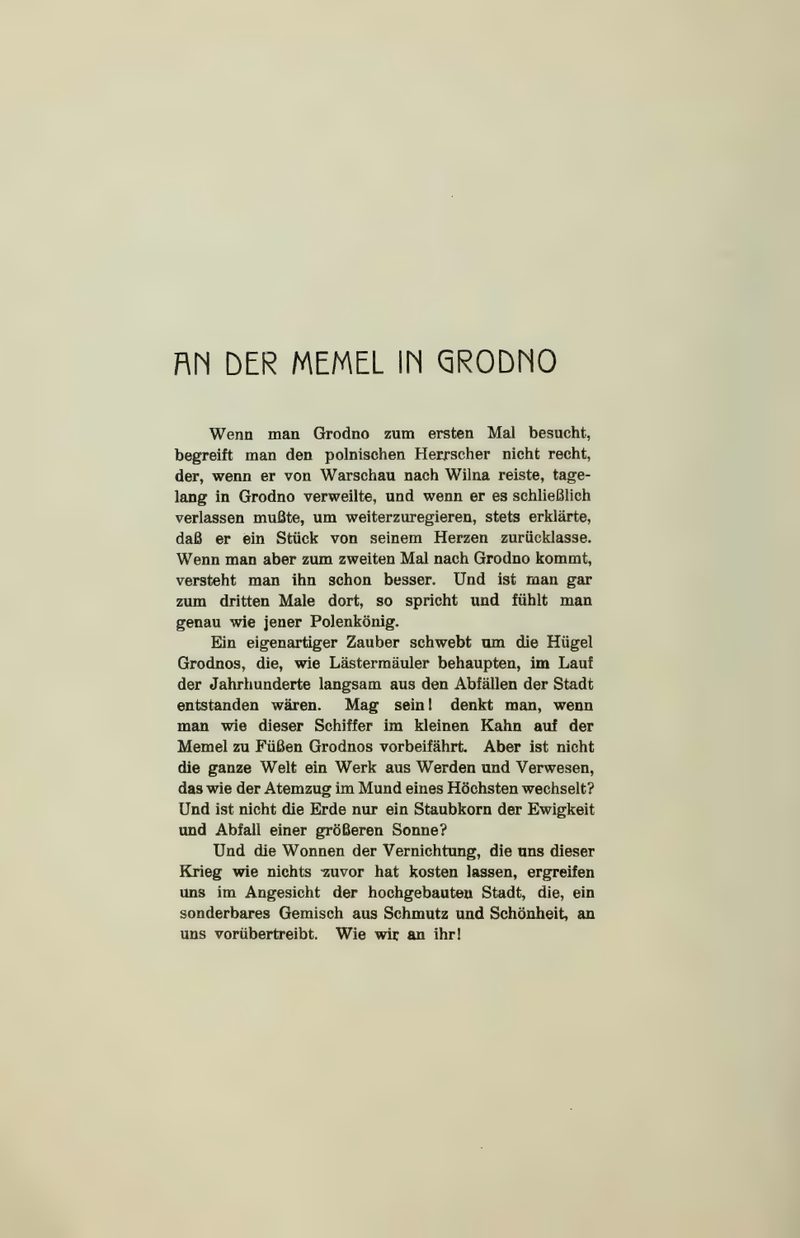
"The delights of destruction". At Grodno (page 88) Eulenberg writes: Und die Wonnen der Vernichtung, die uns dieser Krieg wie nichts zuvor hat kosten lassen, ergreifen uns im Angesicht der hochgebauten Stadt, and the delights of destruction, which this war has let us taste as nothing before, take hold of us before the high-built city. The sentence follows a philosophical musing on a world made of "becoming and decay", but the words are the words: destruction, and delight.
"A common future". The book's first text, on Lithuania (page 14), ends by addressing the occupied land: Schau‘ mit uns in die Zukunft, in unsere gemeinsame Zukunft!, look with us into the future, into our common future! On Courland (page 128) he writes of eine etwaige gemeinsame Zukunft Deutschlands und Kurlands, a possible common future of Germany and Courland, and recalls that the Baltic Germans proudly called it die einzige wahre deutsche Kolonie, the only true German colony. To be precise: Eulenberg attributes the word "colony" to the Baltic Germans, and quotes it approvingly.
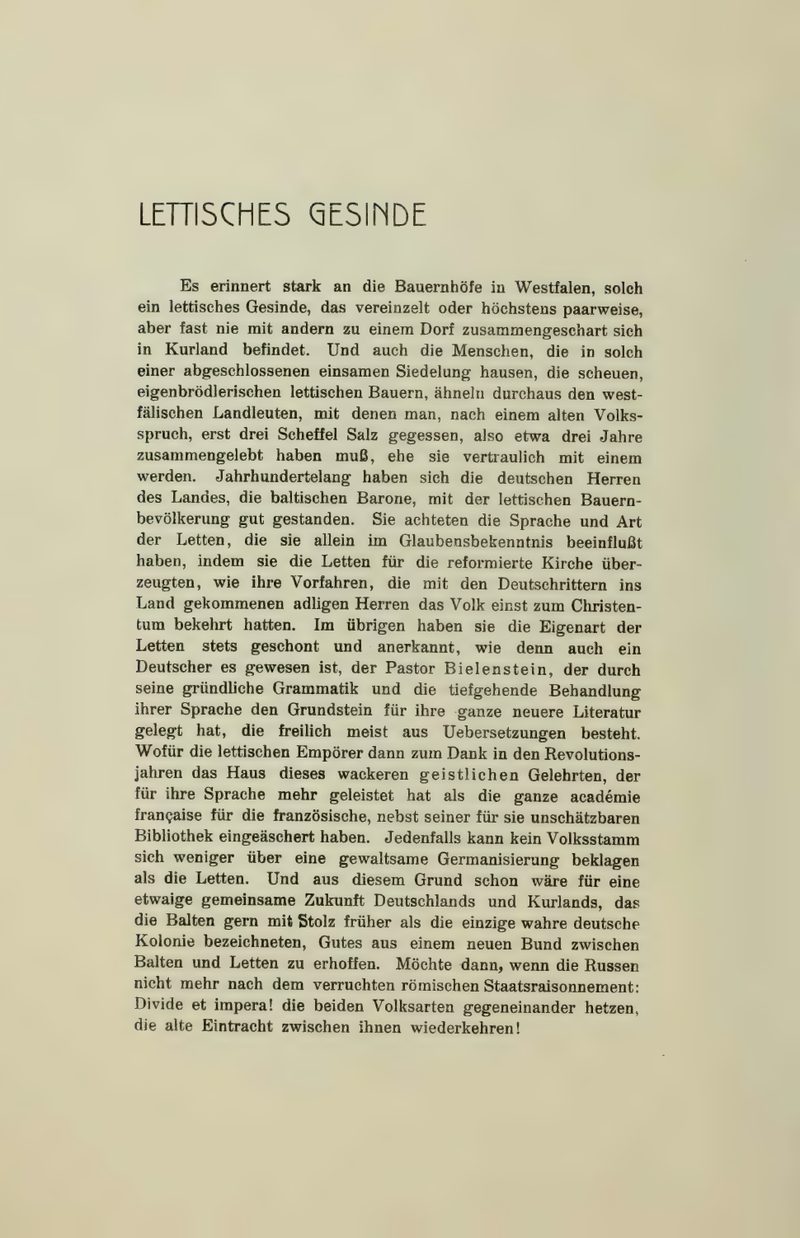
"Thoroughly German". Of Mitau, today Jelgava in Latvia (pages 104 to 106), he writes that it is "a genuine little German town", and ends by noting that by the mill pond on the square "not a word of Russian is heard any more": everyone now speaks the language of the German barons.
"The consciousness of masters". Aboard the cruiser "Augsburg" in the port of Libau (page 122) the sailors give off ein frischer Hauch des Herrenbewußtseins, a fresh breath of the consciousness of masters, and Eulenberg complains that England is trying to rob the Germans of their colonies. At the unveiling of the monument to the capture of Libau (page 120) a Zeppelin returning from a raid "proclaims" die heutige Weltmacht des [...] nun für immer geeinigten Deutschland, the world power of a Germany now united forever.
The review. This is not an innocent travel book. It is a record of occupation from the occupier's point of view, written for readers in Germany, printed by the military government and dedicated to its commander. The land belongs to "us", its harvest is sent "home", and its people are invited into a "common" future with Germany.
Jews in the book
Whether the book is antisemitic needs a precise answer, because the picture is mixed. There is no direct antisemitic incitement in it. There are stereotypes, mockery and condescension, alongside texts that describe the suffering of Jews with real sympathy. All of these texts are Eulenberg's.
"Eastern Jews". In the foreword, which Struck also signed, the Jews appear in the list of "peoples" of the occupied territory, Ostjuden, beside the Lithuanians, Latvians, Belarusians and Poles: one more of the groups in the lands whose "spiritual conquest" the book sets out to advance.
The Jewish porter (page 52). The text opens with the prejudice of the "Westerner" arriving in the East for the first time: Juden sind doch nur reiche Leute. Leute, die Geld zusammenscharren, oder schon so viel haben, daß sie es ausleihen. Natürlich nur gegen hohe Zinsen, Jews are only rich people, people who hoard money or already have so much that they lend it out, at high interest of course. The text refutes the prejudice with the figure of a poor old porter. But the Jew's speech is written in a comic dialect (Daitsches Geld!, Gott soll Aich behieten), and the scene ends with his thought: Was für Fragen ain Goi tun kann!, what questions a goy can ask!
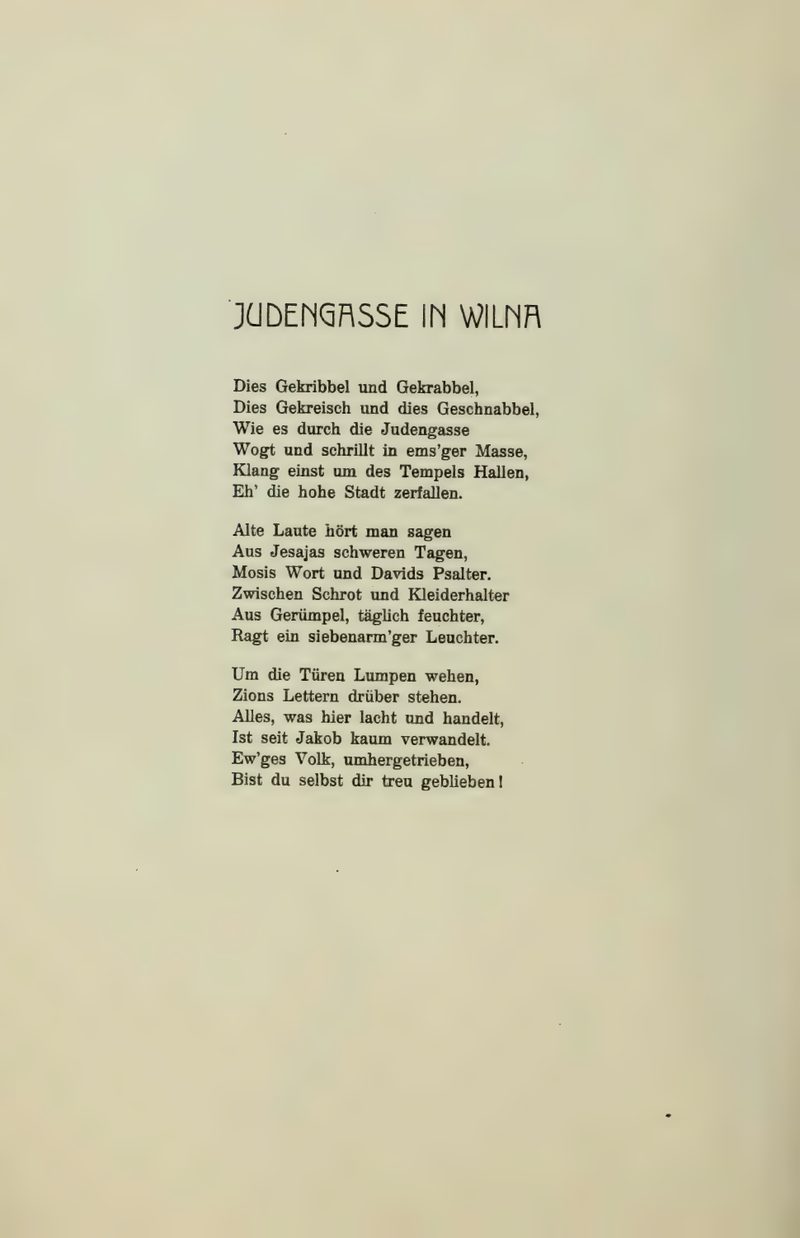
The Jewish lane in Vilna (page 66). A poem that opens: Dies Gekribbel und Gekrabbel, Dies Gekreisch und dies Geschnabbel, Wie es durch die Judengasse Wogt und schrillt in ems‘ger Masse, this teeming and this crawling, this shrieking and this jabbering, as it surges and shrills through the Jewish lane in a busy mass. Gekribbel und Gekrabbel are the German words for the swarming of insects. The poem ends with Ew‘ges Volk, umhergetrieben, Bist du selbst dir treu geblieben, eternal people, driven about, you have stayed true to yourself. This is sympathy from above, through the image of a swarming mass.
The expulsions by the Russians (pages 92 and 106). "A Jewish builder" (page 92) is the strongest text in the book. The builder Schmerl tells how the Russians expelled the Jews of Kovno within 24 hours, shouted at him Ihr verfluchten Juden seid alle selber halbe Deutsche, you cursed Jews are all half Germans yourselves, and laughed about his pregnant wife: So sind zwei Juden weniger auf der Welt!, then there will be two fewer Jews in the world! In Mitau (page 106) all the Jews were expelled within 24 hours, einerlei, ob krank, alt, schwanger oder schwach, whether sick, old, pregnant or weak.
The review. Eulenberg describes Jewish suffering truthfully and with force. But that suffering also serves the book's war story: the Russians are cruel, and the Germans come "to help". Right after the expulsion of the Jews of Mitau comes the sentence about the "German warriors" who came to rescue their "Baltic brothers and sisters", not the Jews. And when the Jews are not victims, they are objects of curiosity and amusement: dialect, "goy", a swarming mass. This is the stance of an occupier looking at "his" peoples, the Jews included.
Why it matters today
Hermann Struck was one of the founders of Bank Mizrahi and held founders' shares in it. Bank Mizrahi Ltd. was registered on 6 June 1923 as company number 520000522, still the number of Mizrahi Tefahot Bank today. The book appeared seven years earlier. There is no claim here that the bank was founded in the spirit of the book. There is a fact: one of its founders, at forty and in German army uniform, signed a text that describes conquest as a "contribution" and people as "the subjugated", and dedicated it to a man who would later march beside Hitler. On the shares and the registration, see What Is "Mizrahi" in Mizrahi Tefahot Bank? Hermann Struck, the Ludendorff Dedication, and the Shares Sold to European Jews.
In 2026, according to the bank's report for the second quarter, Mizrahi Tefahot Bank's mortgage book stands at about NIS 253 billion, about 40% of the market. A mortgage is a lien, a form of bondage over property. Between conquest and subjugation, what has really changed?
Download the full book
⇩ Download the full book, PDF, 138 pages, 8.8 MB
Source: Internet Archive, University of Toronto copy, archive.org/details/skizzenauslitaue00stru. Page numbers in this article are the page numbers of the PDF file. Translations from German are ours.
Questions and answers
What book did Hermann Struck publish in 1916?
Skizzen aus Litauen, Weissrussland und Kurland, sixty lithographs by Struck with texts by Herbert Eulenberg, Berlin 1916. It was printed by the press of Ober Ost, the German military government in the territories taken from Russia, and dedicated to General Ludendorff.
Did Struck write "All our roads lead to Germany"?
The sentence All unsere Wege führen nach Deutschland closes the foreword, which Struck and Eulenberg signed together. The other texts in the book are Eulenberg's.
What is the link between Hermann Struck and Mizrahi Tefahot Bank?
Struck was one of the founders of Bank Mizrahi, held founders' shares and signed the bank's 1924 share certificate as a director. The bank was registered in 1923 as company 520000522, still the number of Mizrahi Tefahot Bank.
Is the book antisemitic?
It contains no direct incitement. It contains stereotypes and mockery, such as the prejudice about Jews lending at interest (refuted in the text), comic dialect and the Jewish lane described as "teeming and crawling", alongside sympathetic accounts of the expulsion of Jews by the Russians. All of these are in Eulenberg's texts.
Sources
- Hermann Struck, Herbert Eulenberg, Skizzen aus Litauen, Weissrussland und Kurland: 60 Steinzeichnungen, Berlin: Georg Stilke, 1916. Internet Archive, University of Toronto copy.
- German History in Documents and Images (GHDI): the defendants in the Hitler-Ludendorff trial, Munich, 1 April 1924.
- What Is "Mizrahi" in Mizrahi Tefahot Bank? (registration of the bank, founders' shares and their sources).
AI assisted in reading the book, translating and drafting. Every quote was checked against the scan of the book. This is not legal advice.